
 Shop
Shop Shop Schnapps
 Shop Gin
 Stockists
 Our Story
 News
News Spalding Art
 Distiller’s Blog
 Schnapps Distilling
 Gin Distilling
 Gallery
 Distillery Door & Cafe
 Sculpture & Garden Walk
 Contact
 Join Our Team
 Join the Wildbrumby Club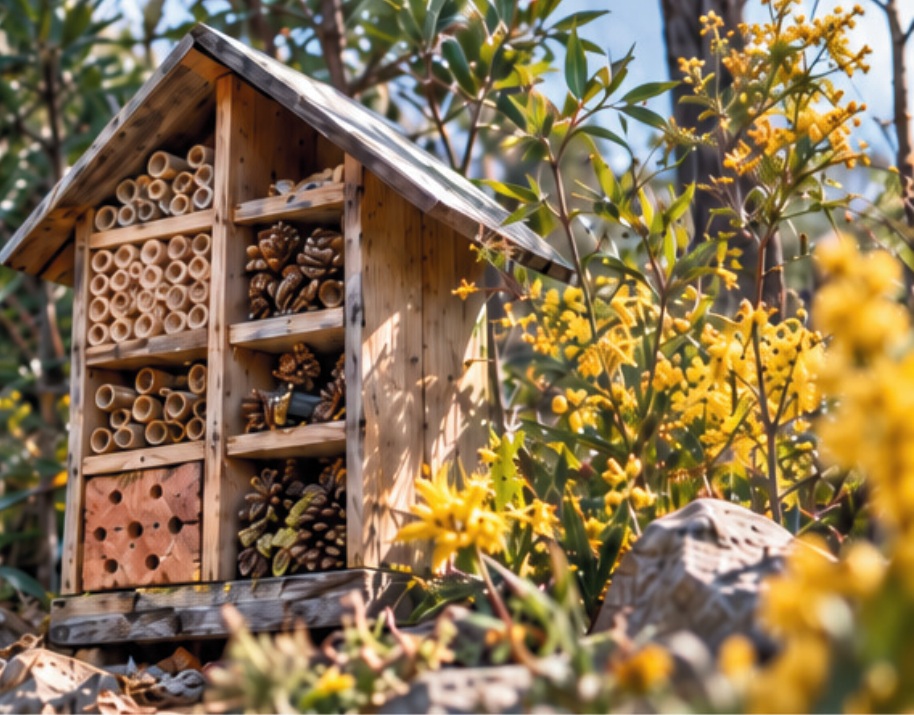
A simple afternoon project for kids and grown-ups, and a cosy little home for native solitary bees to lay their eggs.
Why build a native bee hotel?
Bees and other pollinating insects are an important part of the
landscape around us. They move pollen between flowers, helping
plants reproduce and allowing many fruit trees and crops to develop fruit.
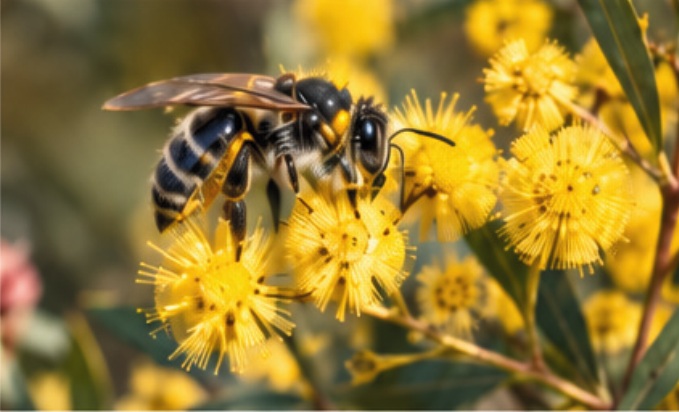
Australia has more than 1,600 native bee species. Most are solitary bees and some nest in ready-made holes rather than hives. At wildbrumby, much of what ends up in our schnapps starts with fruit and before there can be fruit, there first needs to be a flower. Creating small areas of habitat in our gardens is one simple way we can give native insects a helping hand.
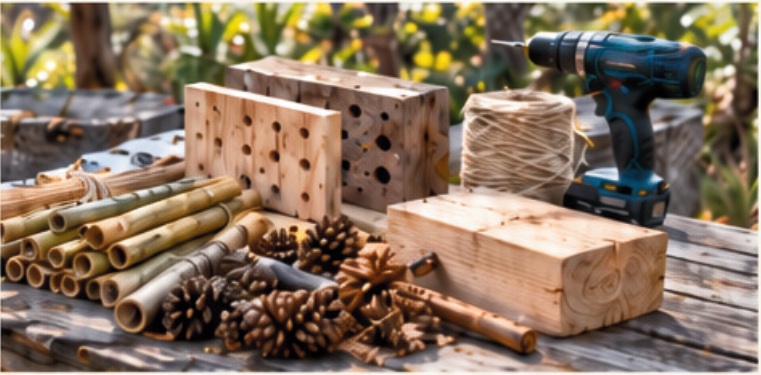
What you’ll need:
- Untreated timber offcuts or a small wooden box
- Bamboo canes or hollow plant stems
- A block or two of untreated hardwood
- Drill and drill bits approximately 3 – 8 mm
- Sandpaper
- Twine, screws or hooks for hanging
- Optional bark, seed heads, pine cones and
- Other natural materials for decoration
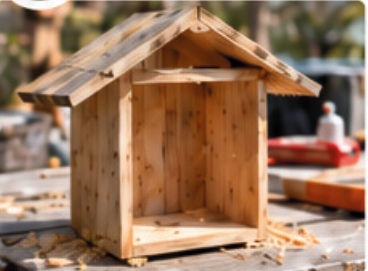
1. Build the frame
Make a simple little box with a roof, or reuse a small timber crate.
A lightly overhanging roof helps protect the nesting materials
from rain.
2. Create nesting holes
Drill smooth holes 10 – 15 cm deep in different sizes (3 -8 mm). Don’t drill all the way through.
Sand the entrances to keep them smooth.
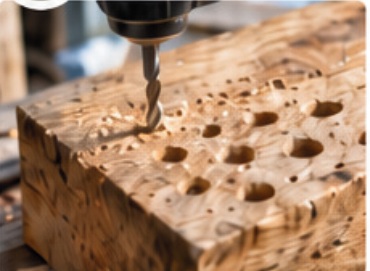
3. Fill it up
Pack the hotel with bamboo, hollow stems and drilled timber
blocks so everything sits snug and dry. Fill spare spaces with bark, seed heads or pine cones.
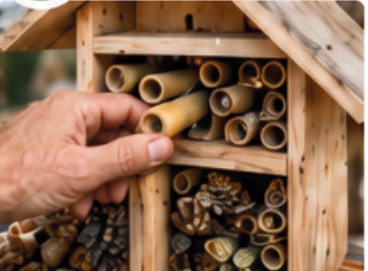
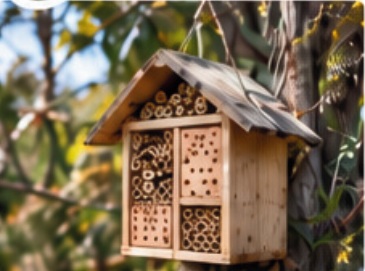
4. Hang it outside
Place it 1 -2 metres above the ground in a spot with morning
sun, sheltered from heavy rain and wind.
Bee-friendly tips
- Best for native solitary bees – not honeybees.
- Keep the holes smooth, dry and chemical-free.
- Ask a grown-up to help with drilling and hanging.
- Refresh damaged stems or tubes when needed.
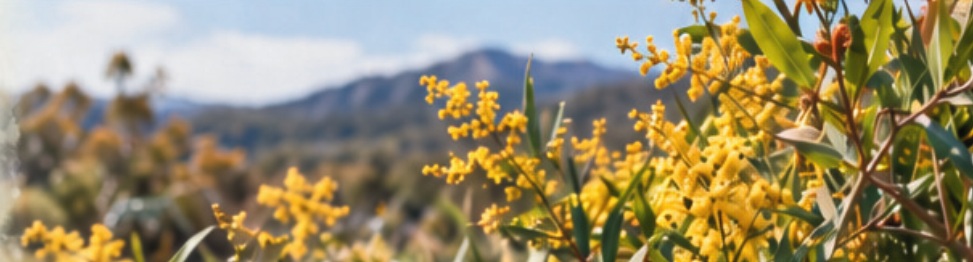
- Plant a variety of native flowering plants nearby.